Thursday, December 10, 2015

Wild and free


We were driving in our large and comfortable car, with our boys in the back seat playing games on iPads. At a glance we are just another family like many world over, who live in homes with electricity and running water and take holidays to far flung paces. If you looked more closely however, you would have seen that the boys feet were leathery and dirt stained from a week of running across hills barefoot, with boys whose lives are so different to theirs. The differences lie only in the world of things (we have, they don't) and with children this barrier fell away in the moment it took to throw a ball or start a game of tag.


We spent a week sleeping in a mud hut, sharing our days with backpackers, wanderers and the local Xhosa people whose villages dotted the landscape around us. We had hoped to introduce our boys to an Africa that we both know quite well - one where rural poverty and traditional lifestyles merge with our modern one. It is a world where mud huts have solar panels to charge cell phones, but women and girls still walk long distances carrying water and firewood on their heads. Our boys spent their mornings doing school work and the afternoons quickly became time to play with the local boys who would turn up every day after school, to see what we were up to. The local children spoke only Xhosa and ours spoke only English (save for a few shared words like "soccer") but the language of play is a powerful one that overrides any spoken language. Afternoons would turn  in to hours-long games of tag, where none of them could recall or pronounce each other's names so instead they all called each other "friend". Our boys would disappear from sight, part of a pack that ran past us from time to time in a blur of boy, laughter and bare feet. The local kids had no toys to speak of and so the few things that we had with us, became hotly sought after items of interest. It was humbling to see how well children who are used to have nothing share toys, each took his turn and waited patiently for another. 


Two of the most common fears of middle class, suburban parents is that ones child might be run over by a car or abducted by a stranger. It was strange and amazing to be in a pace where neither posed a problem - there were no cars and to the local kids, there were no strangers in the village of their ancestors. Our boys ran wild and free with them well in to dusk each night. It was a beautiful thing to see the joy in their friendship and the freedom that this place gave to us all. There is a lyrical quality to rural poverty and one can quite easily romanticize a life without cars, lived amongst family, with gardens filled with maize and with chickens wandering in and out of mud hut homes. It is beautiful and peaceful, but the realities are harsh. Each hut has its own vegetable garden, since there is neither a shop, nor money to spend in it. Life is simple but there is no work, which means no money beyond limited government support and income generated by family members working in cities. 

Bulungula Lodge operates off the grid, with a minimal carbon footprint. It sits on an extraordinary piece of pristine and wild coastline in what was once called the Transkei in South Africa. Green hills roll towards the sea along miles and miles of coastline, all of them dotted with huts, livestock and vegetable gardens. We travelled to Bulungula for its remote beauty and immersion in the local community, who recently acquired 100% ownership of the lodge. With its solar power, composting toilets and aquifer fed water supply, we lived off the grid and with minimal impact. Our impact lay in the money we our stay brought to a community with no other source of income. What began 10 years ago as a backpackers lodge has grown in to a program of social upliftment (the Bulungula Incubator), providing work, health services and education for the community around the lodge. As always what we gained was as much or more than we gave and the lessons our boys learned of a common humanity, no matter our skin color or income, are ones that once learned are never lost. We will be back.


When less is more.

We recently stepped out of our normal lives to spend 6 months together as a family, traveling through Southern Africa and spending time visiting family and places dear to us as parents, but that our boys barely knew. 


We left California with 8 suitcases, which carried within them sleeping bags, school  books, art supplies, clothes for 2 seasons as well as cameras and computers and a few essential toys each boy chose to travel with.

We have managed to lose a number of things along the way and buying something generally means something else had to be given away. We left behind in California many of the things we thought we couldn't live without (toys, tv shows, mountain bikes) and have instead filled our time with multi generational meals around tables, hiking up mountains and games involving imagination rather than toys. We brought iPads which have been loaded and reloaded with books as our boys have read their way through long drives and days without tv or digital media.


What have we missed? Not much from the world of things. We have missed friends, our dogs, the comfort of our own beds and adventures up the mountain behind our house.

 The richness of time together and time away from rushing between work and school has filled our days. We have had time for simple pleasures, with many hours spent in the ocean and hiking dusty trails. Our bank accounts may be leaner, but our lives are immeasurably richer.

Wednesday, September 16, 2015

Tea & Rusks


This is what breakfast looks like for us right now. We leave our campsite at sunrise in search of wildlife and eventually stop somewhere with a line of sight that will give us advance warning about approaching predators. The breakfast picnic is packed the night before and is both a pretty simple and quintessentially South African way to start the day. A flask of rooibos tea steeps overnight, creating deep umber brew and a flask of hot water sits ready for coffee, hot chocolate and ceylon tea. To accompany all of these choices we have fruit and then rusks - also known as "beskuit". We use the bonnet ("hood" for my American compadres) of the car to pour and serve from and then we eat somewhere close enough to jump back inside if need be. The boys often sit on the roof, for a birds eye view and added safety if surrounded by dense bushveld. Usually breakfast is mellow and we savor the moment to be out of the car and take in our surroundings after a few hours of game driving. As people who currently live far from the land of rusks, each bite is a treat as we sip and dunk our way through our repast.

To give some perspective, rusks are a corner stone of the South African comfort food experience. They are sold everywhere and come in a variety of shapes and forms, but certain things remain consistent: they are a slightly sweetened, soda-style bread, ideally made with buttermilk that once baked is cut in to portions and then dried until crisp. They are something akin to biscotti, but not as sweet and are a whole lot less fancy. 


A rusk has a buttery flavour and is a dry, crumbly thing to eat on its own, but dunked in to a cup of tea (or coffee or hot chocolate) it softens just a little and picks up the hot drink in its nooks and crannies. When one takes a bite it is a mix of buttery dry crispness and liquid all at once. Somewhat like roasting a marshmallow, there is an art to dunking a rusk and with each rusk there is a unique experience of texture and flavour with each person preferring a different length of dunk. There are the soakers, such as my eldest son, who likes to dunk his rusk until it has softened to the point of it possibly falling apart in a soggy mess before it reaches his mouth. I prefer the quick dunk and the flavour of tea and rusk in my mouth together, but separate.


The most classic form of rusk is a buttermilk rusk made with white flour, it is a light and buttery experience as seen in the photo above. The bush-worn hand belongs to my husband with whom I share a his and hers relationship with rusks. He prefers a buttermilk, pure and simple version, while I err towards one made also with bran flakes, some whole wheat flour and possibly nuts of some kind. My mom sent us off in to the bush with a box of her homemade "health rusks" and when those ran out I bought a delicious buttermilk-bran version from a South African food purveyor that we found in Maun, seen below. It is crisp, nutty, buttery and good.


We are on a sell drive safari and do our own catering and therefore have tailored our mornings to whatever it is that makes us happiest. Rusks don't spoil in the heat and stay fresh for a good long while - perfect when shops are a hard day's drive away and fresh baked goods an impossibility in the bush. They are central to our happiness. We were amused to stop alongside a safari company's vehicle the other morning to say hi and see that their morning spread mirrored ours. Tea, coffee and rusks served to people for whom it would have been a novel experience. I love the thought that countless tourists have come to the bush and learned the sweet joy of a rusk dunked in a cup of tea or coffee. Maybe some will remember them with affection and even try their hand at baking some when back home. I bake my own in California and have turned friends and neighbors in to rusk-lovers along the way. 

NOTE: this is not a recipe type of blog but if this posting compelled you to make your own, contact me and I will send you a recipe once back on the grid. 

Monday, September 7, 2015

Water in a dry place (2)

Water in a dry place is a recurring theme in my paintings and now too I realize in places that I am compelled to seek out. Whether it is that Africa imprinted itself on me during the first 22 years of my life, with a love of dry, dusty heat and the juxtaposition of rain when it eventually comes. Or is it whether I am simply drawn to the meeting of opposites, I don't know. It is likely a little of each.

Botswana is a country defined by both its lack and abundance of water. Much of the country is sandy and dry, it once having been the bottom of an ancient and massive lake. It sees annual evaporation exceeding annual rainfall in much of the country and the dry season is for much of the year. In the center of this otherwise deeply dry place lies the Okovango delta - a place of lush green growth and abundance of water that fills annually when the river that feeds it floods. We are here right ahead of the rainy season, so it has been dry for a long time and cows are thin and the land is parched as everyone waits for rain and green grass to return. The delta however still has cool deep channels and rivulets running out in to the earth, with thick papyrus and palm forests lining the waterways. 


Flying over the delta yesterday, we looked down over a minaturised world of elephant and hippo seen from above and gathering around rivulets and pools that are the end point of a river's journey. This is the place where the river pools and drains in to the earth, bringing life and abundance, months after the last rains fall. It is an emerald in a yellow-grey landscape, with snaking lines and forms utterly organic yet at the same time abstracted and graphic. It's beauty like a cool glass of water to a partched throat.

Monday, August 31, 2015

Young travelers

We are a family of four, currently spending our waking and sleeping hours in close company with each other as we adventure through African wilderness. Brothers in a back seat and parents up front for what is at times hours and hours of driving on rutted and dusty roads. At night we share tents which are perched on the roof of our vehicle. 


When not driving, the children stay close to us and more extremely so after dusk, due to the presence of predators. Our days are physical and at the mercy of the elements, rutted roads and whatever the elephants, giraffe and lion are doing. We are up before dawn in search of nocturnal predators before the heat of the day sends us to shelter in whatever shade we can muster. At night elephant trumpet ferociously and the deep rumble of lion calls keep us awake. The kids have learned to eat foreign food and sleep in beds not their own. Early wake up calls are tough on our 11 year old whom we  rouse from deep sleep each morning. For a modern parent used to tending to the details of my children's comfort, it is quite liberating to see them happy to sleep draped over a camera bag in the back seat, whilst bouncing along rutted tracks, with mid afternoon heat acting like a soporific.


Kids are wonderfully resilient if given the chance, it's funny how giving them that chance is such a big deal.


Sunday, August 30, 2015

magnificence fear awe & beauty

We have landed in Maun, a true safari town and supply post placed in the heart of Botswana's National Parks. We arrived dust covered and filthy, looking forward to showers, beds and something cold to drink. We have been here before and the route we just took was a mirror of our previous trip two years ago. It has been surprising to find ourselves recognizing  bends on a dusty road or the face of a man who sold us firewood, when those details were ones we thought we had forgotten. There was a moment when I wondered why we would come back to a place that we had travelled to so recently, when there is so much in the world that I still want to see. Now that we are on the other side of an intense experience, I have no doubts as to why we are here. We have driven vast distances, worked hard and been uncomfortably hot and dirty; yet what this effort gave us access too, is worth every ache and exhausted sleep. We have witnessed within feet of us, extraordinary interactions between species and also within family groupings of animals. We were in a place that is a long drive from which ever direction you approach it from and that remoteness brings with it the reward of vast areas of wilderness with little evidence of humankind's impact. No lights, no trash, no asphalt covering the earth. Just fires burning in the vast dark of the African night, there to cook on, provide light and keep predators at bay. A pretty pure form of simple.


During game drives, we encountered herds of Wildebeest racing across the veld, spotted light footed jackal in the first rays of sunshine and seemed to come across a giraffe behind every shrub. So many of the animals that we observed had their young with them and our presence without fail saw adults moving to place their bodies between us and their babies. The care and tenderness of parent towards child seemed no different whether a human or animal. Is it purely survival of the species that leads them to protect their young or is there tenderness there too? Hard to know, but it feels like there is. 


We watched in awe as elephant almost ran to water holes on sweltering days, their delight clearly evident as they wallowed, splashed, drank or simply stood, taking in the pleasure of water on days of blazing heat. Babies were always flanked by adults and younger elephant rollicked while elders took a more dignified approach to the celebration of muddy water going on around them. In a memorable moment, we watched a massive bull elephant leave a waterhole in order to escort an uncertain youngster to it, when his access to the water had been cut off by vehicles which had pulled up more intent on their photo opportunity than allowing what was happening to take place. The bull was forced to walk within feet of us in order to "fetch" the youngster and made his displeasure clear. He walked with the slow power that these massive creatures do, stopping along the way to give us a long, hard look, putting us in our place. Our windows were down and we didn't move a finger or take a photo as he stood feet away, with us at this mercy and in his sights. Like him, we were trapped by the other vehicles and could do nothing but sit quietly and hope no one around us angered him. He eventually moved on and we breathed again. 

We were continually struck by the difference between the herbivores and the predators who hunt them. They are two such different kinds of creatures - herbivores gently grazing all day with an almost meditative grace and predators whose hunting creates a maelstrom of activity and their lazing under the shade of a thorn tree, is accompanied by the knowledge that simply standing up will create a stir. (A stir amongst the hunted, but also amongst all of us hoping to get a glimpse of their tawny fur!)


Lion are always high on everyone's safari bucket list and our early mornings were often rewarded with lion sightings. One lioness gave herself away by the twitch of a dark-tipped ear above golden grass as we drove passed her. We stopped and watched as she lay in the morning light, us wondering if her breakfast might walk passed. We held our breath as a lone giraffe grazed her way over to the lioness's hiding place. The lioness crouched, her body tight and muscles bulging as she sized the situation up, ready to launch an attack. She held her position, but eventually must have thought better of the potential injury that trying to take down a giraffe on her own could mean. She eventually lay back down and waited for something else to come by and the giraffe grazed on, oblivious to the drama that she had played a part in. 

The gift of information that we gave about a lion we had spotted, was rewarded by information given in return a few hours later. A guide whom we had tipped off, tipped us off in return about a pride of lion a short detour off of our route to Maun. We had a long drive ahead of us that day but took his advice and were rewarded immensely with a pride 10 lion sitting in the shade at the edge of a water hole, waiting and watching for what might arrive to drink on a hot day. We watched them sizing up elephant - a smaller group with babies piqued their interest and one young male took the chance to prowl closer to the water, following an elephant as it walked down. He was young and foolhardy and so backed off when he realized that no one else had joined him. That elephant group moved on quite quickly, possibly aware that the lion were there. Shortly afterwards a massive herd slowly moved in, threading past our vehicle as they emerged out of the bush around us. We watched as they walked within feet of the lion, very often unaware of them - the first of the group walked so silently that we watched as he and the lion all jumped in fright as he passed them, all of them noticing each other in the same moment. Dust, nerves, adrenalin all lifted and then settled again. More and more elephant came down, either walking on the far side of our car - herding their babies away from the lion, using us as cover, or walking between us and the lion - who were at the most lying 20 feet away from us, putting us all in close proximity with each other. It was awe inspiring to be in the thick of this tinderbox, wondering if it all might explode. Ultimately the herd was too big and the lion backed down, letting the elephant revel in the waterhole undisturbed. We stayed until the latest we could and eventually had to leave, knowing the distance that we had to drive and the heat which was building and with two boys who had already been in the back seat for 5 hours at that point and were getting wriggly. 


We pointed our Landcruiser south and headed for Maun, away from the magic of the bush but with hours of dusty and rutted roads to get through before we were there. We had time to decompress and digest the world we had immersed ourselves on a road that made us appreciate were we had been even more.


Sunday, August 23, 2015

A place of magic and giants.


Two years ago we embarked on an epic adventure with our young boys through the country of Botswana. We wanted Africa become a part of our American born sons, we wanted to see wild Lion while there still are some to see and we wanted to drop off the grid for a while. We did all of the above and more, but as we headed home, we knew that we were not yet done and needed to return.

Crossing the border into Botswana a few days ago, the kids whooped with delight - vast landscapes, the warmth of the Setswana people, living simply out of our vehicle and the thrill of adventure all lay ahead of us. As always we had made careful plans but always with room for a meander or two. Our first nights were spent somewhere new to us, but one we already hope to return to - the Goo-Moremi Gorge in the Tswapong Hills. Our campsite was pristine and perfectly simple, with a solar heated shower - a luxury we didn't take for granted, knowing what lay ahead of us. A huge tree stood at the center of our site, it's branches a canopy over us.


The Tswapong Hills are spiritually significant to the local community and have been so more as long as people have lived here due to springs that provide year round streams, waterfalls and deep, dark pools. The hills are also one of the few breeding site of the endangered Cape Vulture. A walk up the in to gorge was one of cool, green contrast to the otherwise dusty sun baked surroundings. A black and white patterned Monitor Lizard slipped away across a stream shortly after we spotted him and we watched Cape Vultutes circling high above us, before swooping through the gorge, close enough for us to see them clearly without binoculars. There was no one other than us and our guide. He moved with the languid pace of someone who knows to slow down on a hot day, pointing out trees, leaves and birds, with references to conservation, traditional medicine and magic all woven together.


Our next stop was a place that two years ago had left us needing to know better. Lekhubu Island once looked out over a vast lake, now it is perched above a vast salt pan. It is a place of magic, with a long history of inhabitatian and ritual. It is still used by local communities for supplication to rain gods and then there are the travelers like ourselves in constant pilgrimage to this vastly beautiful place. It is an outcropping of rocks in a salt pan, covered with ancient Baobab trees, cairns, stone walls and otherartifacts of ancient inhabitatian. The road there was long and hard-driving on a day of shimmering heat. We finally found ourselves driving across a dreamscape of salt pan, with Kubu Island rising above it in the far distance. We got there in time to make a cup of tea in the shade of the Baobab at the center of our campsite before walking out on to the pan to watch the sun set and dusk's gentle light envelope us. As the sun dropped low, the day's brutal heat lifted and the kids ran as far and fast as they could in every direction, while land and sky turned in to mirrors of each other. 


We took a family selfie to capture the exuberance that this beautiful and hard to get to place had rendered in us. Then we walked back to camp where another one of Africa's mighty giants was sheltering us for the night.


Wednesday, August 12, 2015

Sea and sky and a false bay

Cape Town is a city in large part defined by its geography - Table Mountain rises majestically over the city center and it is flanked by two Oceans and miles and miles of coastline.

 The mountains that run away from "the table" form a peninsular that runs out in to the sea, with the Indian and Atlantic Oceans meeting at it's tip. False Bay is a vast bay that sits on the Indian Ocean side and was given its name by explorers  who ran their ships aground when they thought they were following a coastline, not entering a bay.

I recently spent some time at the foot of the Overberg mountains in a small beach town that looks across False Bay towards Cape Town. Our days were governed by the sea, sky, clouds, wind and the views across the bay. 


A balmy blue skied winters day gave us views of the bay, that was a jewel-like shimmering blue with Table Mountain and the peninsular clearly visible across the water. The day slowly changed, hinting at what was to come. Clouds moved in and treated us to a magnificent sunset, but by morning the mountain across the bay had disappeared from sight and the wind gradually picked up, with an iciness that sent us inside. By nightfall the only place to be was indoors, along with anything that might blow away. We hunkered down, lit a fire and listened to rain pelting the windows and the wind battering windows, walls and roof.


It was about 48 hours of wind and howling rain before the sun came out and the world became calm again. We walked down to the beach to find the shoreline transformed - littered with the bright colours of a myriad plastic bottles, wrappers, caps, buckets and plastic fragments. The wind had blown seaweed on to our shore, but with it also a bays-worth of plastic debris.


It was plastic debris that told stories of carelessly discarded trash, waves that had swept away a child's bucket and spade and rainwater that washed streets clean but swept with it trash in to the ocean. It is as if False Bay has a gyre, a small version of the North Atlantic gyre and it had landed up on our beach. What was there to do, but clean the beach before the plastic got washed back out to sea. The power of a few people making a big difference turned out to be the lesson of the day as 3 of us (2 adults and a 10 year old boy) filled bags of recyclables and trash over the course of an afternoon. Once we were done, we headed back over the dune and looked back to see the beach restored once more to the colours of sand, shells and seaweed.


Thursday, July 23, 2015

Pack lightly and hold the ones you love close.

We left home 4 weeks ago but funnily enough, we never left home at all. We have travelled from our adopted home, to the motherland - Africa, home to all mankind but less dramatically, homeland to my husband and me. Currently we call California home, but by now we have racked up homes in a number of places: Cape Town, New York City & Marin County and a few more.

For our children however, home currently is the place we left behind with their beds, toys dogs and friends. We have moved a lot over the past 30 days, changing locations numerous times, being embraced by two different families as well as fellow countrymen and countrywomen that our boys didn't know they had. Our youngest got a bit shaky at one point, yearning for his bedroom back in Marin. We were standing in a 130 year old stable that had been converted into a bedroom, it was freezing cold outside and cozy in an adventurous kind of way. We gathered the boys close, in a family hug-huddle of sorts and broke the news that it would be a long time until we would be back in our own home and beds. Along with that news came the number one lesson for those with gypsies for parents - the four walls we live in and all of our "stuff" isn't in fact that important and might very often stand in the way of a grand adventure. Pack lightly, hold the ones you love close and step out the door to see what wonder awaits.

Saturday, July 11, 2015

Where? And why?


We are back doing what we love - the four of us, some essentials (cameras, surfboards, wetsuits, water colors and some good books) on the road through somewhere wide open and very beautiful. This time we have gone big - leaving our home and lives in Marin for a 6 month sabbatical in Southern Africa. It's a chance to catch our breaths, work on new material, reconnect African roots and family and step away for a time from all that which normally defines our days.

The ocean and mountains will be the boys schoolyard and their classroom will be wherever we are. Early mornings will be in order to capture a wave or sunrise or maybe to seek out a lion before it retires to the shade of a tree for the day. Rush hour, school bells, Monday to Friday won't exist for us, in this precious time that we have carved out for ourselves.

 It took months of double time to make it happen, but we are finally here on the southern tip of Africa, ready to go.


Friday, June 20, 2014

Salt circles


At Death Valleys low, salty base lies the Badwater basin. Like the pans we travelled through in Botswana, they are alive and fluctuating, with water that waxes and wanes, in an otherwise dry place. In Badwater, the high salinity of the earth below leaves behind salt crystal formations when rising spring waters dry up. Salt crystals crunch beneath bare feet and form lunar-like circles across the surface of the pan. Water in a dry place always leaves a shadow of itself when gone, more often than not it is a circle.

Wednesday, June 18, 2014

A circle in a map

We are on the road again, creating what I realize is another circle on a map. This time the circle leads from our front door, around the Grand Canyon and back home again.

 We added some miles to our journey by taking a detour through Death Valley, a low, vast and very hot place. An eleven hour drive took us from Marin County, to Furnace Creek, at 242 feet below sea level, it is an ocean of dry. We arrived at 6pm, to temperatures of 116 F/ 46C and abandoned plans to watch the full moon rise from a ridge top. We opted instead to watch it rise from the mineral water fed pool on our hotel grounds. A huge golden moon rose, chasing the setting sun over a vast, dry place - while we floated on our backs in a pool.


The following morning we filled our water bottles and headed out to explore a place that supports only the hardiest of life - and in that lies it's beauty.

The highlight of our time was as always, the line on a map that was a little thinner and more broken up than the other roads. It took us on a 28 mile one-way road, over winding passes and through narrow canyons. Along the way, we passed through a ghost town, this town having existed for only a year as a living one. It's entire life was based on wildly exaggerated claims of riches to be found and 300 prospectors, who within a year of its creation, had already abandoned it. Old mine shafts and remnants of buildings were all that was left of dreams of striking it rich in this harshest of places.


As with many ancient and undisturbed places, we found Petroglyphs carved thousands of years ago, telling of ancient lives in this relatively unchanged place. (Pink filter in the photo was accidental, but somehow works!) We had seen big horned sheep clambering up a sheer rock face 20 minutes before finding ancient drawings of its ancestors, made by someone who stood right where we were and etched its likeness on to a rock. From there our drive took us through Titus Canyon, a winding water-carved route through the mountains. 
Again, time and space seem to bend, with the ancient and the present somehow merging. The best part was, that we had this magnificent place all to ourselves.


Friday, September 13, 2013

Water in a dry place.

A recurring theme in my work is that of water - a lack of it, too much of it,  a bowl of it or a cloud full of it. I have explored this theme from many aspects. I save water in my home, work not pollute our oceans and stand up for clean water for everyone. Water is precious and we need it far more than many of the other things that we think we need.

A theme that I keep coming back to in my paintings and photos is that of a pool of water in an otherwise dry landscape. The initial inspiration was a farmers dam at sunrise while on a road trip in 1992. It burned in to my imagination so deeply I have neither forgotten it or shaken the impulse to explore it.


In Botswana, we drove through a landscape in the driest stretch of it's dry season. Rain hadn't been seen in months and water holes were cracked, parched reminders of what had been. In Savute we found that the marsh had (in the mysterious way that it does) started to fill a few weeks prior, despite i tbeing in the driest months of the year. A possible tectonic shift had sent water flowing back in to the landscape from a distant source.  Small streams and rivulets ran from the river which flowed to the marsh and seeped  in to the cracked-dry earth. Once the ground was water-logged, pools formed.

The blue of the sky mirrored in the water's surface and contrasted with the dry-yellow of the grasses all around. Tell-tale green shoots were coming up all around, even well away from the pooling of water, sensing the return of moisture. New life, hope, food, relief and a study in contrasts.

Water in a dry place.


Tuesday, August 20, 2013

Beauty in the details

I always use travel to recharge creative juices very often depleted by getting through the daily grind. It helps that as a family we err towards travel to the wild and beautiful places that inspire me. The past 6 weeks have delivered on every front and in quite different ways.

What strikes me the most is the contrast between a wintery Western Cape in South Africa, followed by the dry landscape of Botswana.  

Winter sun in South Africa left colours saturated and recent rain had brought a lushness and deep greens to landscapes that are dusty and dry in the summer months. Aloes in full bloom lined the roads of the garden route and brilliant yellow Lucerne fields cut swaths through green farmland. Rainwater tanks, earthen dams, windmills and simple farmhouses - all long standing areas of exploration in my work, lined the roads as we drove up and down the coast.

 Favorite themes revisited.


Then we switched gears, flew and drove north into a landscape where annual evaporation exceeds annual rainfall and the rain that does fall, comes in the summer months. It is a bone dry landscape in the winter with deeply rutted tracks bearing witness to summer mud now rock hard and devoid of water. 

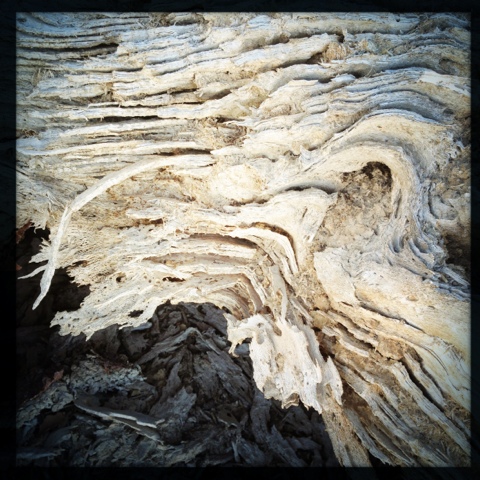
The beauty here? Some of it lay simply in the stark, vastness of the landscape but most of it lay in the details and contrasts. Beauty lies in the lines of a road cutting through an empty landscape, the brilliant yellow of grasses against a deep blue sky, a brilliant orange seed pod, the paper-thin layers of a fallen Baobab tree, the tenacity of a thorn tree growing in a place with little to no rainfall, it's branches designed to bring maximum shade to animals seeking shelter from the relentless sun.
               
Beauty in the bush lies in the small patches of black just above an impala's hoof, the delicate polka dots on a Chobe bushbuck's belly, the crazy stripes on a zebra that continue up the his/ her mane, a warthog's Mohawk, the gingery tear drop above a lion's eye and the light dots on their massive paws, a giraffe's long neck and eyelashes, the iridescent hues of the lilac breasted roller, the brilliant sheen and elegant curved horns of the sable antelope. All this attention to detail reminds me of couture on a catwalk, except that this is everyday dress for the animal kingdom. 

Rain, dry, lush, barren, empty, full, blue against gold, red against grey, immense trees reduced to paper thin reminders of centuries of growth. So many contrasts, so much beauty.


Friday, August 9, 2013

Full circle Full hearts

The past few days have been the completion of a loop of sorts, taking us to the far side of the ancient pans of our first days and then traversing them on a track marked by GPS points rather than road paint or signs. Once again, it was only us and a vast and empty landscape in every direction. Ancient silt, now a chalky powder covered our clothes and bodies and added a new layer of dust to every surface, bag, camera and book.


We found our way to what was once an island in the middle of a long-gone lake. Even though the water dried up 1000s of years ago, the ancient shore line was rimmed with the round rocks and pebbles, as if at any moment a gentle wave might roll in and lap the shore. Like many a high place in a flat landscape, this island holds mystical importance to local people both ancient and current. Prayers for rain are still made here and 100s of cairns speak of initiation rituals long past. Baobab trees, with bark that seems to fall somewhere between skin and polished granite cover the island. Their roots snake in and out of the ground, their branches reaching out like the arms of a benevolent giant.

After hours of island magic, came the hard work of completing our journey, closing the circle and getting ourselves many hundreds of kilometers across 2 countries and to an airport in time for a series of international flights.


We took in our last African sunsets, found the southern cross in the night sky one last time and burned a last Mopane fire with full but heavy hearts. We watched a final bushveld sunrise this morning as we crossed the fabled Limpopo River. In crossing the Limpopo, we left Botswana and returned to South Africa, completing the circle our travels had created.

Shortly, we will unpack ourselves from and say goodbye to the Landrover which has been our transport and home for 3 weeks. I now know why these vehicles inspire such passion in their owners, it has seen us churning through thick sand, water logged marshes and impossible looking roads. Now we fly down a 4 lane highway with only the dust covering us to tell of the adventure we left behind.

Full circle, full hearts. We will be back for more.


Tuesday, August 6, 2013

No lights

The latest leg of our adventure has taken us through vast landscapes with few signs of human impact and few people, even travelers such as ourselves are very few. We have driven for hours without passing another human being and had close encounters with lion - with only us and them and all of us a similar shade of dusty-grey, from head to toe.

Campsites are few, spread apart, without water and very hard to get to. There is no one to call for help if needed, but there is also no one to disturb the sounds of the African night as it descends. We are deep in the Central Kalahari, a vast and relatively inhospitable place where annual evaporation exceeds annual rainfall. We are very far from powerlines, cell towers or paved roads. I found myself looking at the sky last night and picturing night-time satellite images of Earth, where continents and cities are mapped out by lines and clusters of light on an otherwise dark planet.

I realized the the various places I have called home, have always been identified up by a cacophony of lights.  This time I would find my location by seeking out a vast area of darkness in the middle of Africa. No lights, just a deep dark night sky above us and the African night enveloping us.

 If you look on a map, there we are, right in the middle, looking up at the Milky Way.